Overview
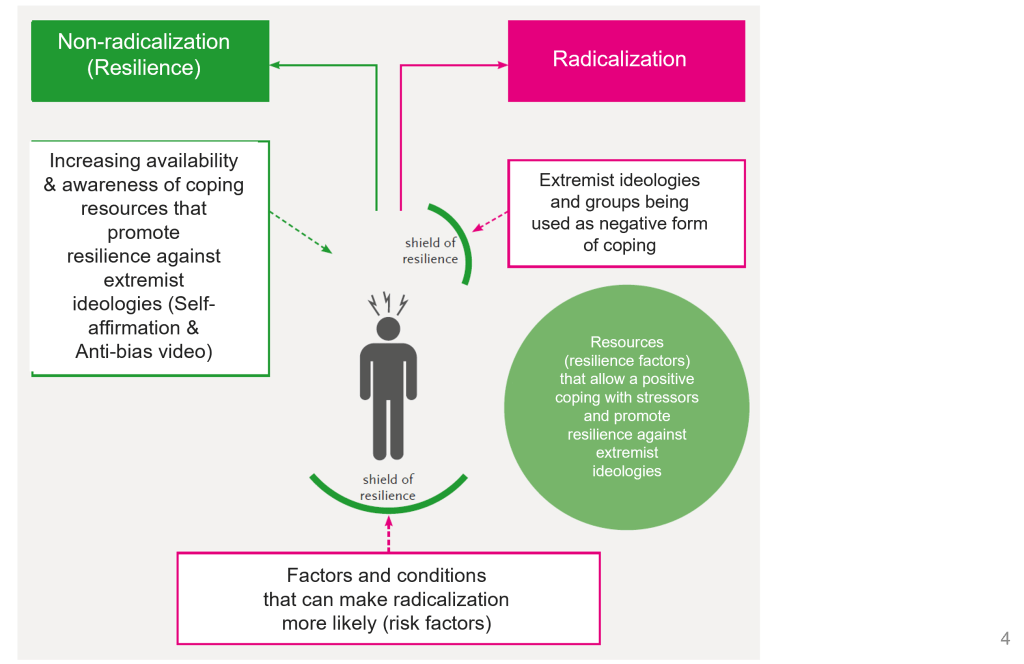
Radicalization among adolescents presents significant societal challenges, often stemming from stress, adversity, and identity-related threats. This project explores the use of self-affirmation interventions to increase resilience against extremist ideologies. Conducted online during the COVID-19 pandemic, the study highlights the potential of self-affirmation to reduce prejudice and improve openness to counter-ideological messages.
You can find the full study (in German) here, as well as the video materials used in this study.
Context and Motivation
- Pandemic Impact: The COVID-19 pandemic exacerbated stress and mental health challenges among adolescents, creating conditions that could increase vulnerability to radicalization.
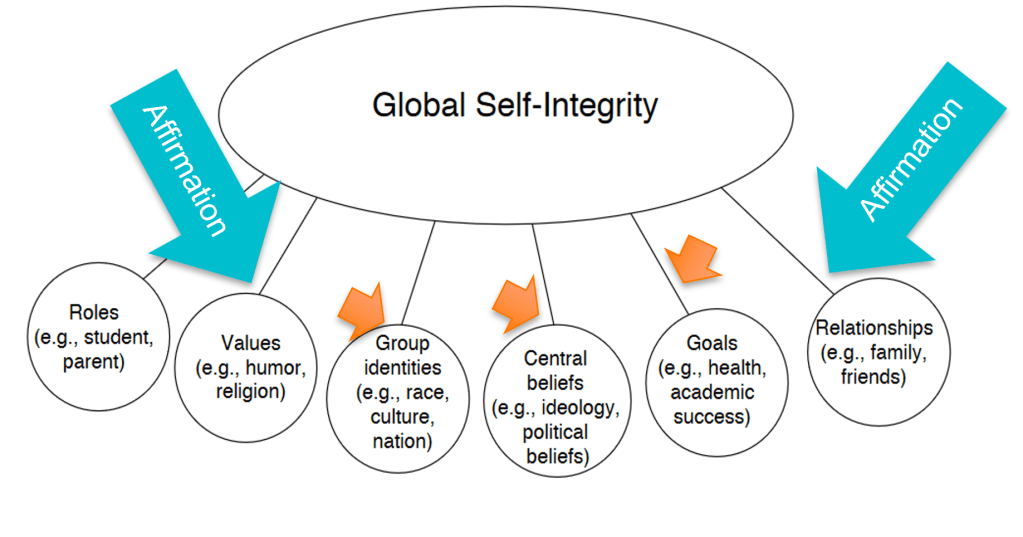
- Theoretical Foundation: Drawing on self-affirmation theory (Steele, 1988; Sherman & Cohen, 2006), the intervention broadens perspectives by reminding individuals of their personal values and diverse social identities. This provides a buffer against stress and maladaptive coping mechanisms like prejudice or extremist ideologies.
Some Correlations
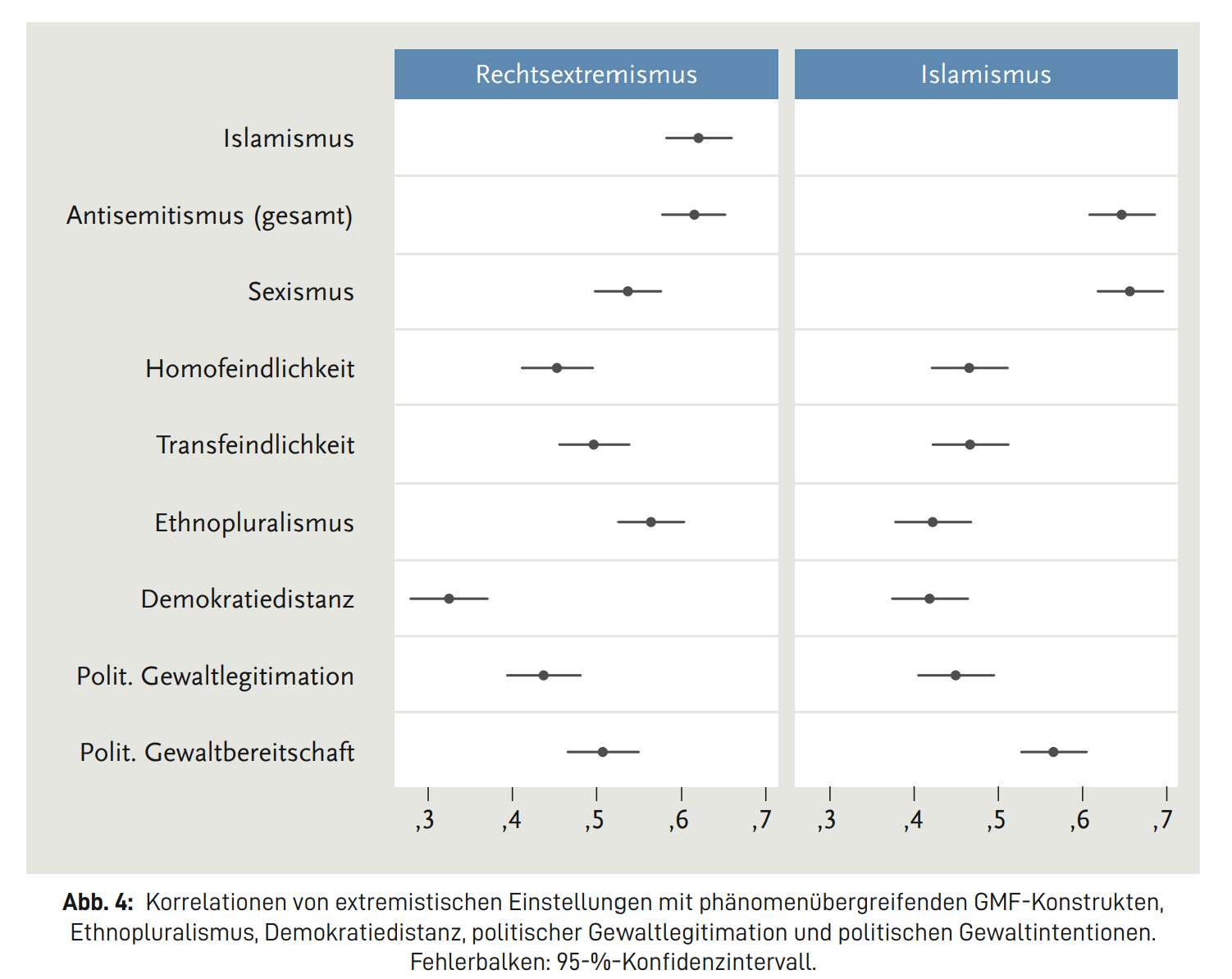
To get some context on how right-wing (RW) extremist and Islamist attitudes are related to each other and other relevant indicators of group-focused enmity (Zick et al., 2008), the above plot shows these correlations. Interestingly, Islamist and RW extremist attitudes show a considerable correlation of r=0.63. That is, people who are more in agreement with RW extremist statements will also be in higher agreement with Islamist statements. While this seems counterintuitive, we are not the first to observe this. A study conducted in Switzerland observed the same parallel pattern (Manzoni et al., 2019). On a more abstract level, both extremisms have authoritarianism and social dominance orientation in common. (For more context, please see the full study (p. 47).)
Methodology
- Target Group: Adolescents aged 16–25 across Germany (online sample, 2021).
- Design: Three waves of data collection:
- Pre-Treatment (W1): Baseline extremist attitudes and resilience factors (N=1,498).
- Post-Treatment (W2): Short questionnaire immediately after intervention (~20 days later, N=873).
- Follow-Up (W3): Radicalization outcomes (~37 days post-treatment, N=614).
- Intervention Groups:
- Control (values affirmation about others).
- Self-affirmation only.
- Anti-bias video only.
- Self-affirmation + anti-bias video.
- Self-affirmation integrated into video.
Intervention Materials
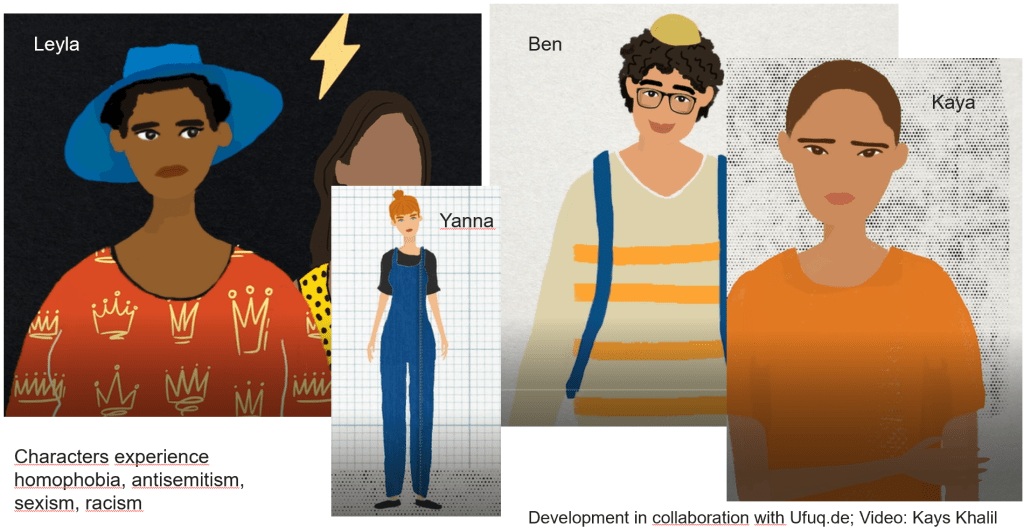
- Anti-Bias Video: Developed with Ufuq.de, the video featured diverse characters experiencing discrimination (e.g., homophobia, antisemitism, sexism, racism) to foster empathy and awareness.
- Self-Affirmation Exercises: Participants reflected on their most important values, enhancing their sense of self-integrity.
Key Findings
- Main Effects:
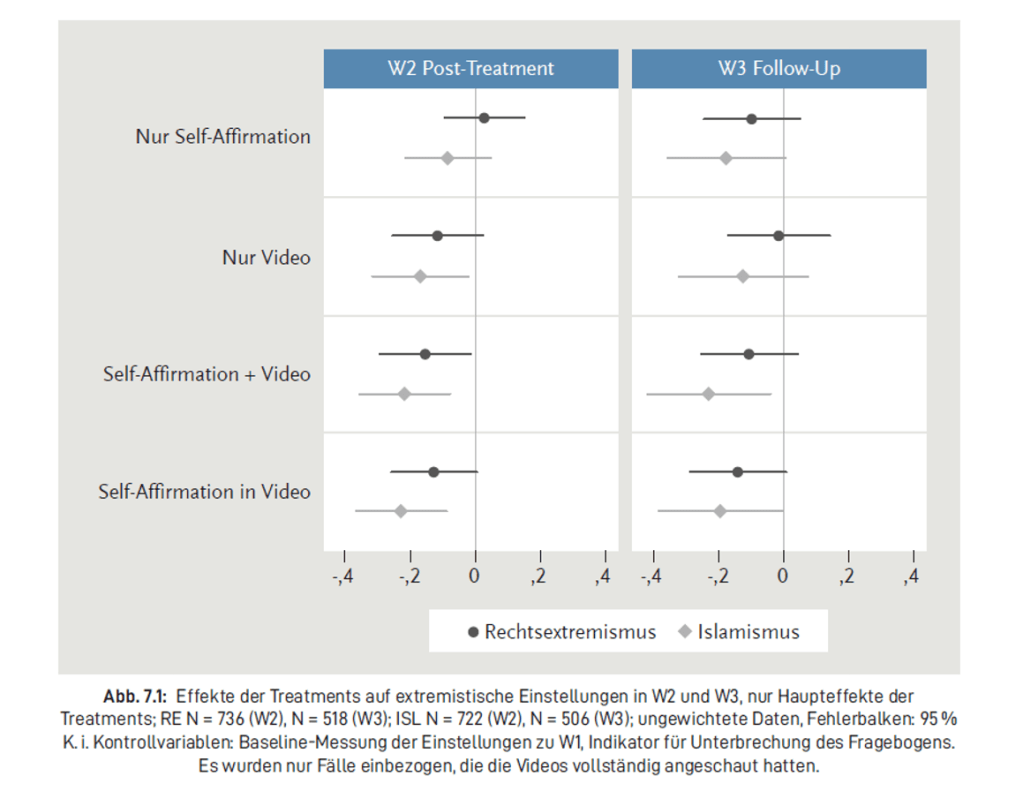
- Marginal treatment effects were observed, particularly for self-affirmation interventions.
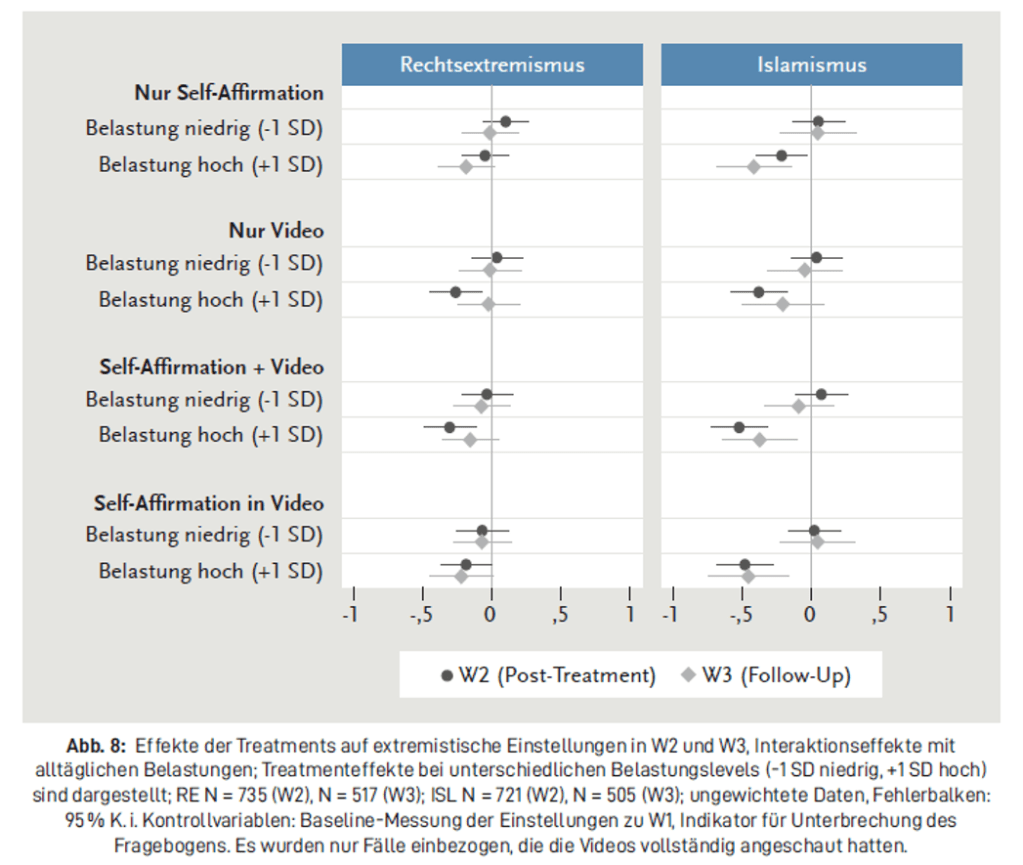
- Treatment effects persisted under conditions of stress, supporting the buffering hypothesis.
- Interaction Effects:
- Self-affirmation was more effective in high-stress scenarios, reducing extremist attitudes and transgression intentions (e.g., mocking or insulting outgroups).
- Limitations:
- Treatment effects were less pronounced for right-wing extremism, suggesting the need for tailored approaches for different ideologies.
- No unintended effects (e.g., increased extremism) were observed.
Implications
- Practical Applications:
- Self-affirmation can complement anti-bias training to improve its long-term effects.
- Interventions are particularly effective under stress, offering a protective mechanism for at-risk adolescents.
- Future Directions:
- Develop ideology-specific strategies for greater effectiveness.
- Investigate the integration of self-affirmation into broader educational and preventive programs.
Conclusion
This study demonstrates the potential of self-affirmation as a tool to build resilience against radicalization. By reducing the need for maladaptive coping mechanisms, self-affirmation promotes openness, empathy, and critical engagement with counter-ideological messages. While more work is needed to refine and tailor interventions, this approach represents a promising step toward fostering social cohesion and preventing extremism.

 Tim Müller – Data Scientist and Social Researcher