Overview
Residential segregation remains a pressing issue in many societies, shaping social cohesion, economic opportunities, and individual well-being. This study examines the mechanisms underlying segregation in Sweden, focusing on two key phenomena: ethnic flight and ethnic avoidance. By analyzing extensive migration data, the research explores whether residents move out of diverse neighborhoods to avoid proximity to immigrant populations (‘ethnic flight’) or whether native-born Swedes avoid moving into diverse neighborhoods altogether (‘ethnic avoidance’).
This was a co-authored article written by myself, Thomas Grund, and Johan Koskinen. Here’s a link to the journal’s homepage.
Citation:
Müller, T. S., Grund, T. U., & Koskinen, J. H. (2018). Residential segregation and ‘ethnic flight’vs.‘ethnic avoidance’in Sweden. European Sociological Review, 34(3), 268-285.
Key Research Questions
- Ethnic Flight: Are native-born Swedes leaving neighborhoods as immigrant populations increase?
- Ethnic Avoidance: Do native-born Swedes avoid moving into neighborhoods with higher proportions of immigrants?
- Segregation Dynamics: How do these mechanisms contribute to patterns of residential segregation across Sweden?
Methodology
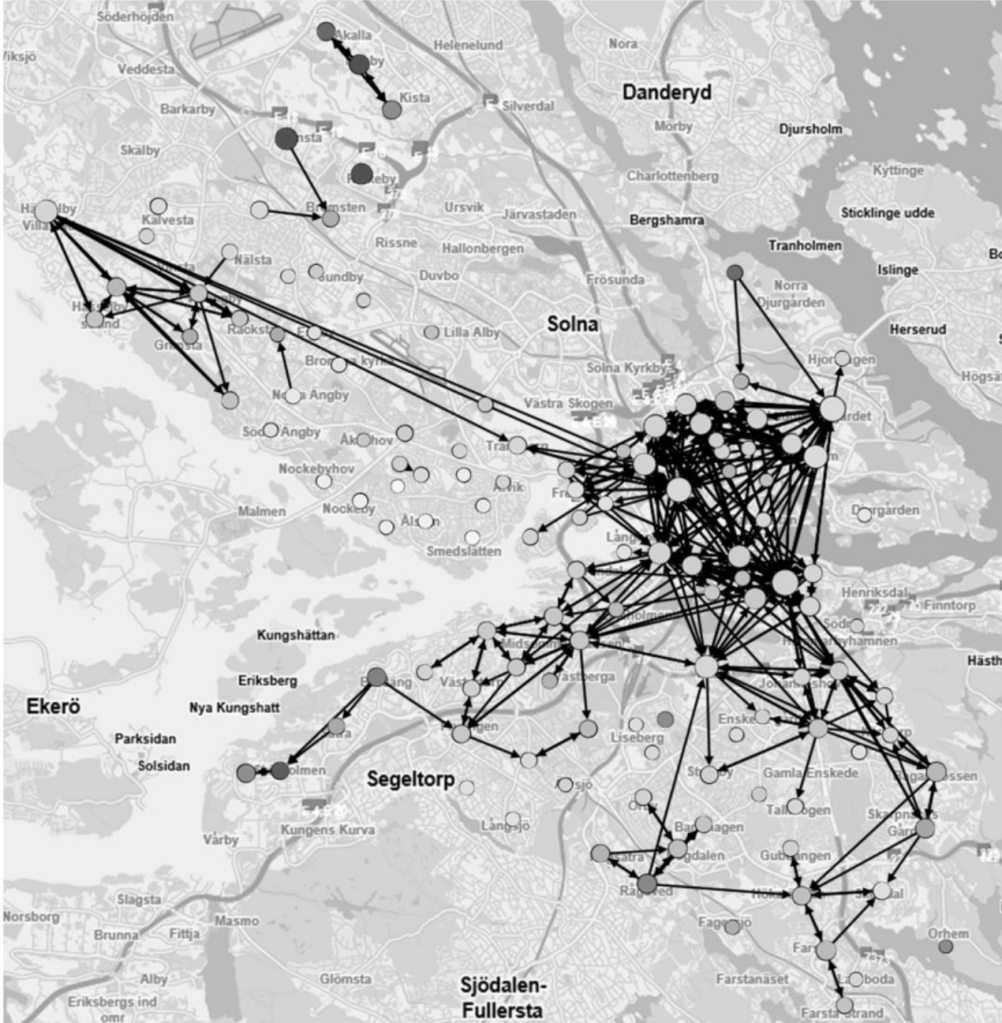
This study leverages population register data from Sweden, encompassing detailed migration patterns and neighborhood demographics. Key analytical approaches include:
- Tracking Individual Moves: Following native-born Swedes and immigrant populations to identify migration patterns.
- Neighborhood Diversity Measures: Calculating the proportion of immigrant residents in neighborhoods over time.
- Modeling Techniques: Employing statistical models to disentangle the effects of ethnic composition on migration behavior.
Findings
- Evidence of Ethnic Avoidance:
- Native-born Swedes are less likely to move into neighborhoods with higher proportions of immigrants.
- This pattern was observed consistently across various regions, suggesting systemic dynamics.
- Limited Ethnic Flight:
- While ethnic flight was present, it was less pronounced compared to ethnic avoidance.
- Swedes were more likely to remain in neighborhoods despite increases in immigrant populations than to leave them outright.
- Segregation Patterns:
- Both ethnic avoidance and, to a lesser extent, ethnic flight contribute to segregation.
- These mechanisms reinforce existing divides, limiting opportunities for integration and interaction between native-born Swedes and immigrant communities.
Implications
- Policy Recommendations:
- Promote affordable and inclusive housing policies to encourage integration.
- Foster community programs that enhance intergroup interaction and reduce prejudice.
- Future Research Directions:
- Explore the role of socioeconomic factors alongside ethnic composition in driving migration patterns.
- Investigate the perspectives of immigrant populations regarding residential preferences.
Conclusion
This article investigates the origins of segregation in Sweden by analyzing selective in- and out-movement patterns. The study focuses on two mechanisms: (i) ‘ethnic flight,’ referring to the out-movement of natives from neighborhoods with high immigrant populations, and (ii) ‘ethnic avoidance,’ referring to the selective in-movement of natives to neighborhoods with fewer immigrants.
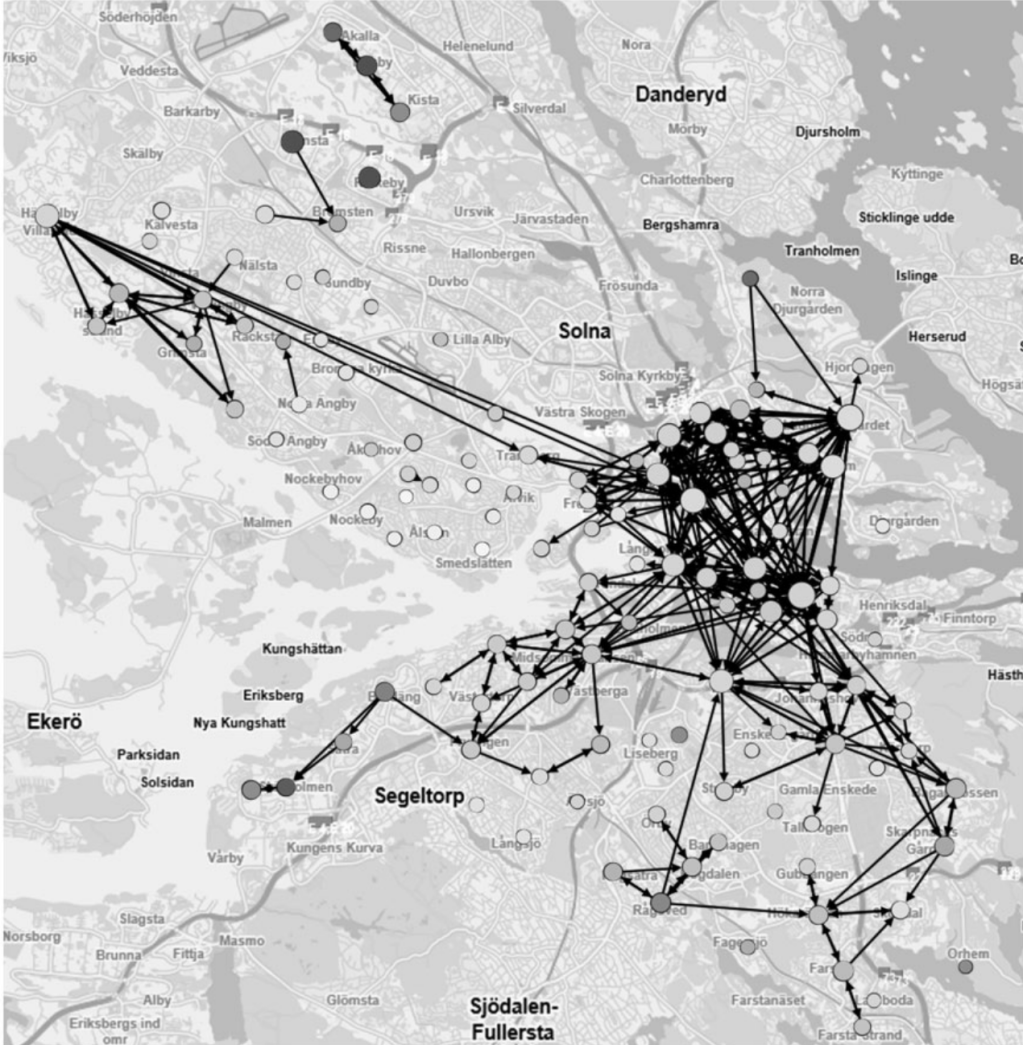
The study employs a two-pronged strategy. At the macro level, Exponential Random Graph Models (ERGMs) reveal that Swedes are more likely to move into neighborhoods with fewer immigrants, a finding that remains significant even when controlling for socio-economic conditions. At the micro level, individual-level analyses show that immigrants are more likely than Swedes to move into neighborhoods with high immigrant shares, with limited evidence for ethnic flight among Swedes. These patterns suggest that ‘ethnic avoidance,’ rather than ‘ethnic flight,’ is the primary driver of segregation in Sweden.
The research also highlights the value of a network approach, which considers neighborhood popularity hierarchies, spatial proximity, and structural dependencies in movement decisions. While socio-economic factors influence residential patterns, the persistence of ethnic preferences indicates that reducing segregation would require addressing these preferences directly. Future work could explore the impact of housing allocation systems and urban planning policies to mitigate the observed segregation trends.
 Tim Müller – Data Scientist and Social Researcher